THE BINDER FIELD GUIDE / 01
Which Charizard did you find?
You remember the roar before you remember the small print. Maybe your binder's still got Blastoise and Venusaur on the first page, Pikachu tucked behind them and Mewtwo, Mew or Gengar somewhere in the back. Recognizing the Pokemon is only the start. The release, language, edition and finish tell you which card you're actually holding.
Start with these two Charizards. Both credit Mitsuhiro Arita and use the familiar pose. They aren't the same release. Read the bottom corner before you search a price.
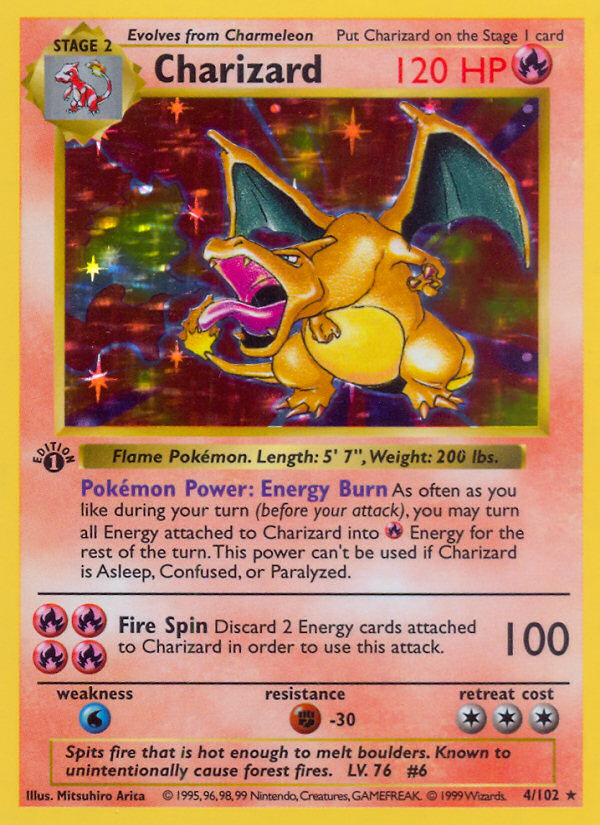
Base Set Charizard, 4/102. This reference shows 120 HP, Fire Spin 100 and a visible 1st Edition stamp. The artwork frame has no drop shadow. It's a 1st Edition example, not an Unlimited reference.
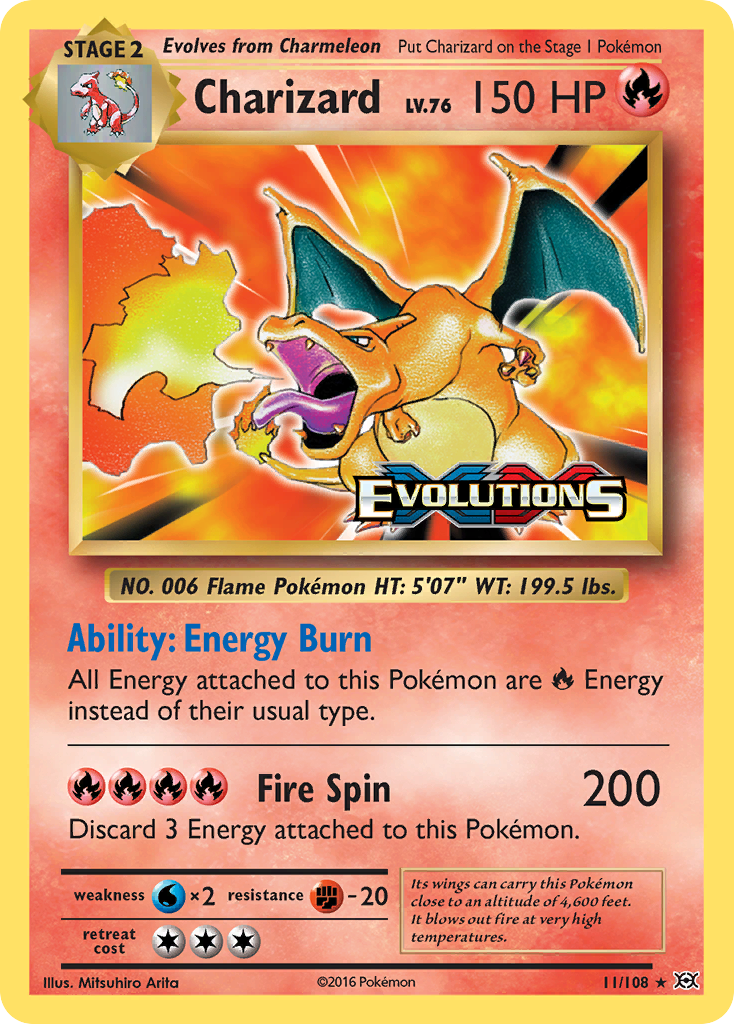
Evolutions Charizard, 11/108. Look for 150 HP, Fire Spin 200 and the 2016 copyright. This particular reference also has an Evolutions logo on the artwork. Don't match an unstamped copy to a stamped listing.
These are unaltered reference scans from PokemonTCG.io. A scan shows visible printing details. It doesn't authenticate the copy in your hand.
1. Copy the number that identifies the card
On the Base Set Charizard, 4/102 sits at the bottom right. Copy the whole fraction. It means card 4 in that release's printed checklist of 102, not the fourth Charizard ever printed. The #6 near the flavor text identifies Charizard in the Pokedex. It won't identify this printing.
On Evolutions Charizard, 11/108 is the collector number. NO. 006 beneath the illustration still identifies the Pokemon. The 120 and 150 at the top are hit points. Neither is a collector number. Keep letters, prefixes and leading zeros when another card uses them.
A number larger than the denominator isn't automatically a mistake. Some releases include cards beyond the printed set total. Confirm the exact checklist before deciding something's wrong.
2. Find the set, then confirm the language
Look near the lower corners and beside the illustration for the expansion symbol or set code. Location changes across eras. A rarity star isn't a set symbol. English Base Set has no expansion symbol, so an empty symbol position can be correct.
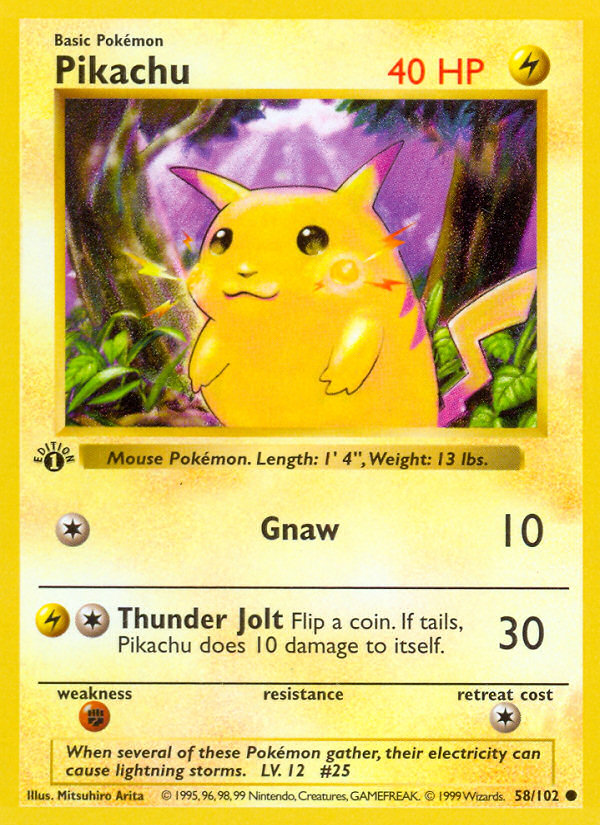
Pikachu, Base Set 58/102. The #25 in its description is the Pokedex number. The 1st Edition stamp on the left isn't an expansion symbol.
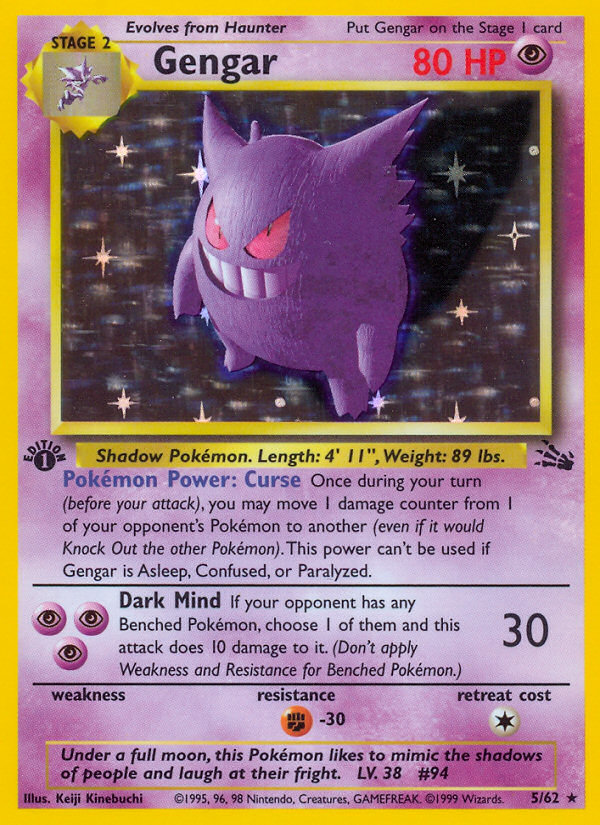
Gengar, Fossil 5/62. The Fossil symbol sits beside the illustration at the right. The rarity star sits beside 5/62. Its 1st Edition stamp doesn't make it Base Set.
Read the card's language rather than guessing from the artwork. Japanese and English releases can use different set names, numbering and layouts. A matching picture in another language isn't an exact match. Record the language before searching.
Pokemon's database instructions explain name, expansion and illustrator searches. Use those fields to narrow a match. A missing result isn't proof of a fake.
3. Read English Base Set editions carefully
For English Base Set Pokemon cards, inspect the circular 1st Edition stamp below the illustration at the left and the drop shadow along the artwork frame's right edge. Compare printed frame design, not a shadow cast by your room lighting.
1st Edition: the Charizard shown above has the stamp and no frame drop shadow. Shadowless: the familiar collector label usually describes the unstamped Base Set printing that also lacks that shadow. Unlimited: the usual later layout has the frame shadow and no 1st Edition stamp.
Machamp 8/102 is the important exception. Base Set Machamp was distributed in starter decks with a 1st Edition stamp, including copies with the later shadowed layout. Its stamp alone doesn't put it in the same printing category as the Charizard shown here.
Don't apply Base Set's shadowless distinction to every expansion. Gengar's Fossil printing needs its own reference. If the frame, stamp and copyright details disagree with the example you're using, leave the edition unresolved.
4. Keep finish and condition in separate fields
Tilt your card gently under a light. Record where the foil appears: the illustration, the surrounding card surface or another area. Regular holo and reverse foil versions can share a collector number. Foil patterns also change between sets, so one universal shine test won't work.
Copy every visible logo or promotional stamp separately. For the Evolutions reference above, record the artwork logo explicitly. The image alone doesn't establish its distribution or reliably show every foil detail. Leave those fields unconfirmed until a variant reference agrees.
Then photograph the front and back. Note whitening, scratches, dents and creases. Those describe your copy's condition, not its identity or authenticity. Wear doesn't prove a card's genuine and a clean surface doesn't prove it either. Don't tear, bend or peel a card as a test.
5. Build two records before searching
Record A / 4/102
Charizard. English. Base Set. 4/102. 120 HP. Mitsuhiro Arita. No expansion symbol. Visible 1st Edition stamp. No artwork frame drop shadow. Holo artwork reference. Condition of your own copy: inspect separately.
Record B / 11/108
Charizard. English. Evolutions. 11/108. 150 HP. Mitsuhiro Arita. Expansion symbol at the bottom right. Evolutions logo on artwork. 2016 copyright. Exact finish and distribution: unconfirmed from this scan. Condition: inspect separately.
These records describe the illustrated references, not a card you haven't inspected. If your Charizard lacks the artwork logo, change that field. Don't copy an example's edition or finish into your notes just because its name and number match.
6. Match sold listings, not wishful asking prices
On desktop eBay, choose Advanced beside the search bar. Enter the name, set and complete collector number. Apply Sold items when available, then search. Completed listings can include unsold items. Open the result and check that it actually sold.
Before keeping a comparison, match all these fields: language, expansion, number, edition, artwork stamp and foil variant. Compare an ungraded card with ungraded copies in similar visible condition. A graded listing isn't a direct comparison for a loose binder card. Exclude lots, different printings and listings without useful photos.
Check the sale date and shipping cost too. If an accepted offer's actual amount isn't visible, don't treat the displayed asking price as a confirmed sale amount. Save several close matches rather than choosing the highest result.
Your next move: finish one card
Pick one favorite tonight. Photograph both sides, copy the identity fields and mark anything uncertain as unconfirmed. Find a reference that agrees before sorting the next page. If the details still conflict, keep the card protected and seek an in person evaluation from a specialist card shop. You don't need a price to make a useful first record.